Browsing the Senior Care Maze: Key Aspects That Separate Assisted Living, Independent Living, and Nursing Homes
Business Name: BeeHive Homes of Volcano Cliffs
Address: 6230 Montaño Rd NW, Albuquerque, NM 87120
Phone: (505) 302-1919
BeeHive Homes of Volcano Cliffs
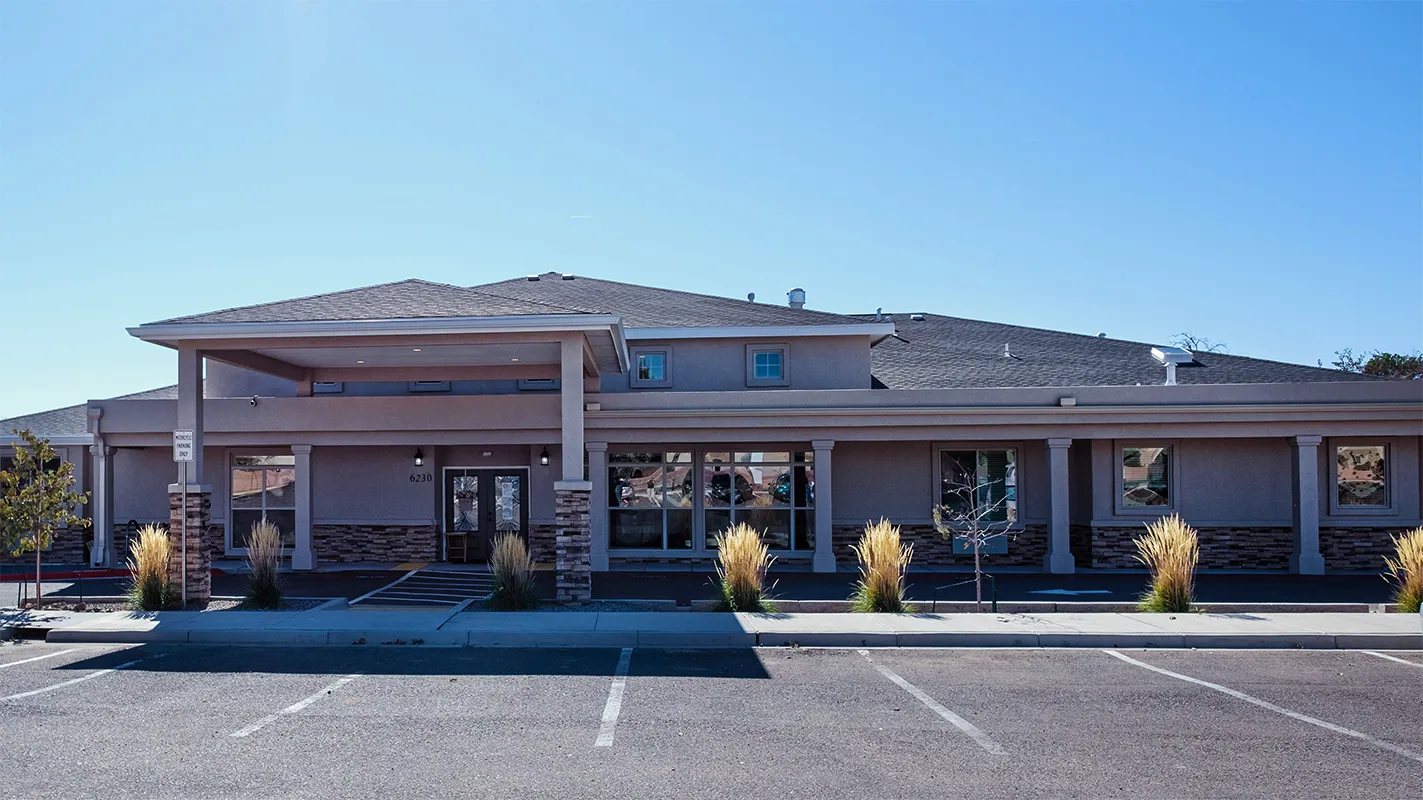
At BeeHive Homes of Volcano Cliffs, New Mexico, we offer the finest assisted living experience available in a cozy, comfortable homelike setting. Each of our residents has their own spacious room with an ADA approved bathroom and shower. We prepare and serve delicious home-cooked meals three times a day every day. We maintain a small, friendly elderly care community. We provide regular activities that our residents find fun and contribute to their health and well-being. Our staff is attentive and caring and provides assistance with daily activities to our senior living residents in a loving and respectful manner. We would like to invite you to tour and experience our assisted living home and feel the difference.
6230 Montaño Rd NW, Albuquerque, NM 87120
Business Hours
Families normally do not enter the senior care world on a calm Saturday afternoon with plenty of time to believe. They show up after a fall, a hospital discharge, a concerned call from a next-door neighbor, or a slow, dawning realization that what used to be minor lapse of memory is no longer safe. By the time individuals begin comparing assisted living, independent living, and nursing homes, the pressure is already high.
I have sat at too many dining-room tables with adult children and older parents, documentation spread out, everybody trying to decipher the lingo. The same concerns repeat: What does mom truly require. What can we pay for. What takes place if dad gets worse. And below all of it, a quieter worry: Are we ready to make the incorrect choice.
Sorting through senior care options gets easier once you understand the core distinctions, where they overlap, and how they deal with real life issues like dementia, several chronic diseases, or household burnout. Labels on pamphlets hardly ever tell the whole story. The details do.
This guide strolls through those details, using the lens that in fact matters: security, quality of life, and realistic support for both the older grownup and their family.
Three really different designs of senior care
The terms get used loosely in conversation, but independent living, assisted living, and nursing homes each grow out of different philosophies.
Independent living concentrates on lifestyle and community. Think about it as a retirement home community, created for older grownups who are generally clinically stable and can handle their own everyday life with light support.
Assisted living bridges housing and care. The goal is to support people who can not securely manage all everyday tasks alone, however who do not require 24-hour competent nursing. It is built around personal care, medication help, and a social setting, not intensive medical treatment.
Nursing homes, or proficient nursing facilities, sit on the medical end of the spectrum. They are certified and staffed to offer continuous nursing care, rehabilitation, and intricate medical management for people with severe health needs or major functional limitations.
All 3 can be suitable senior care alternatives, depending on the scenario. The trouble is that lots of families try to fit a loved one into the wrong classification since it looks nicer, costs less, or feels mentally easier. That is where issues start.
Independent living: freedom, with a safeguard in the background
Independent living neighborhoods are usually marketed as retirement communities or senior homes. They work best for older grownups who are still managing:
- Basic self-care such as bathing, dressing, and toileting
- Walking around, perhaps with a walking cane or walker
- Medications, either on their own or with light reminders
- Meals, with or without on-site dining options
Residents may move in because they are tired of home upkeep, desire more social contact, or feel safer with neighbors and staff close by. Some properties bundle in housekeeping, a couple of meals daily, transportation for errands, and a 24-hour front desk or emergency situation call system. Lots of deal fitness classes, lectures, and clubs that help avoid loneliness.
From a care standpoint, independent living is not created for people who require hands-on aid every day. Staff will typically not help with bathing, toileting, or medication administration. If they do provide additional supports, they are typically limited, a la carte, and might be delivered by a separate home care firm that visits the building.
Families in some cases stretch independent living to cover more than it should. An adult kid might covertly offer the majority of the care, or a frail parent may insist they are "doing fine" since they are eating in the dining-room and mingling. The reality ends up being clearer when a health crisis hits. If your relative can not dependably manage individual health, browse the structure safely, or recognize an emergency situation and call for aid, independent living alone is most likely not enough.
Financially, independent living tends to be private pay, with month-to-month rents comparable to regular homes in the location, plus costs for included services. Long-lasting care insurance rarely covers it, unless there is a medical part provided by a licensed agency.
Independent living matches somebody who is medically stable, socially interested, and still mostly independent with activities of daily living. It is not a back entrance to inexpensive assisted living. When you treat it as such, you are betting with safety.
Assisted living: day-to-day assistance without a medical feel
Assisted living beings in the middle of the senior care spectrum and, in my experience, is where numerous households lastly find the balance they were searching for. It is residential, generally feels a lot more like an apartment complex than a health center, but supplies genuine hands-on elderly care.
Typical services consist of aid with bathing, dressing, grooming, and toileting, medication management, meals, standard house cleaning, and activities throughout the day. Many communities likewise offer escorts to meals, tips for activities, and coordination with outside healthcare providers.
One of my customers, a retired teacher in her late seventies, transferred to assisted living after her second severe fall in the house. She could talk plainly about politics and book club choices, however her arthritis made showering and dressing an everyday experience. She hated the concept of a "facility" yet illuminated when she recognized she could have her own provided studio, her preferred armchair, and someone to assist with early morning regimens. Within a few months, her children observed she was actually more independent, due to the fact that she was no longer tired from combating with tasks that had actually become too hard.
Assisted living communities vary a lot by state guidelines and by operator. Some are more detailed to hospitality with light care, others lean more into medical collaboration. The core, however, is personal care, not proficient nursing. They normally are not equipped to handle ventilators, complex wound care, or really unsteady medical conditions.
Where assisted living shines remains in that gray zone where a person is:
- Safe with the right level of cueing and support
- Socially and cognitively able to benefit from group life
- Not yet needing 24-hour nursing however clearly beyond what independent living or sporadic home care can safely cover
Many assisted living facilities likewise use memory care systems for homeowners with dementia. These are protected environments with higher staffing levels and programs customized to cognitive decline. If wandering, agitation, or hazardous judgment are present, standard assisted living might not suffice, even if the person is physically strong.
From a monetary angle, assisted living is generally personal pay, with month-to-month rates that fold in rent, utilities, meals, and a base level of care. Additional care levels, such as two-person transfers or frequent incontinence care, are usually billed as add-ons. Long-lasting care insurance sometimes helps, depending upon the policy. Medicaid protection for assisted living exists in some states however is typically restricted, with long haul lists.
The biggest hidden element with assisted living is the trajectory of decrease. Many locations do a fantastic job at the point of move-in, when needs are moderate. The challenge appears when your loved one's care level rises. Eventually, the facility might say they can no longer fulfill those needs, activating another relocation. Wise households ask very particular concerns about "what takes place if" before signing a contract.
Nursing homes: medical stability first, comfort a close second
Nursing homes, or experienced nursing facilities, bring a heavy emotional weight. Households imagine long corridors and roommates, and many older adults say, forcefully, "I never want to end up in a nursing home."
Reality on the ground is more nuanced. Some nursing homes are certainly under-resourced and institutional. Others are clean, calm, and staffed by people who truly care and know their citizens well. All, however, share a medical foundation that independent living and assisted living merely do not have.
A nursing home can manage feeding tubes, complex wound care, IV medications, regular injections, and residents who require 2 employee for every transfer. Nurses are on site all the time. Physicians and nurse practitioners visit regularly. The documentation and regulative environment is heavy, often to a fault, but it exists to guarantee that healthcare and security remain front and center.
There are two major roles nursing homes play:
Short-term rehabilitation after a hospital stay. A fall with a hip fracture, a stroke, a serious infection, or significant surgery may lead to a few weeks or months of competent rehab in a nursing facility. Here, physical, occupational, and speech therapists deal with locals to optimize their function before they go back home or to another senior care setting.
Long-term look after homeowners with high requirements. When a person can no longer safely reside in assisted living or in your home, typically due to the fact that their medical requirements are too complex or their functional dependence too expensive, a long-term nursing home stay might be the best choice.
Families sometimes battle this step for months since the concept hurts. I have actually seen loved ones tire themselves attempting to keep a clinically fragile parent at home with rotating assistants, home health, and a constant stream of crises. At some point, acknowledging that a nursing home is not a failure however a shift toward more extensive, reliable care can be an act of empathy for everyone involved.
From a payment standpoint, it is essential to distinguish between Medicare and long-lasting coverage. Medicare usually pays for time-limited competent rehabilitation after a certifying healthcare facility stay. It does not cover long-term custodial care. Long-lasting stays are funded through a combination of personal pay, long-term care insurance coverage, and, when properties meet particular requirements, Medicaid. Medicaid rules differ by state and need careful planning.
Where respite care fits in the picture
Respite care is the security valve that keeps lots of households going. It refers to short-term stays, typically a couple of days to a couple of weeks, in an assisted living or nursing home setting. The resident gets elderly care similar to long-lasting locals, but the expectation is that they will return home.
Respite care assists in several scenarios:
A family caretaker requires to take a trip, have surgery, or just rest without consistent vigilance. A few weeks of respite can keep a stressed caregiver from stressing out completely.
A trial run before a longer relocation. Some older grownups who insist they "will never ever move" want to test a community for 2 weeks of respite. That experience often softens resistance, since they find the routine, staff, and environment are less foreign than expected.
Bridge care after a medical facility stay. When home is not quite prepared, or family arrangements are not in location, a respite stay can supply supervision, meals, and basic rehab while everybody gets organized.
Not every neighborhood uses respite care, and availability varies. Rates are typically computed on a day-to-day basis. The essential advantage, beyond rest for the caregiver, is information. You discover how much assistance your loved one actually needs throughout 24 hours, where they grow, and what bothers them. That details can direct a more permanent senior care decision.
Thinking beyond labels: the genuine drivers of the ideal choice
The names on the sales brochures are less important than a clear-eyed evaluation of needs, choices, and restrictions. When I work with households, I concentrate on a number of core dimensions.
Health intricacy. How many persistent illnesses are we handling. How fragile is the person. Somebody with steady cardiovascular disease and well-controlled diabetes may do great in assisted living. A person with innovative heart failure, regular hospitalizations, and oxygen in the house might require a nursing facility's continuous nursing presence.
Cognition and judgment. Mild amnesia is something. Not acknowledging emergencies, forgetting to consume, roaming, or blending medications signifies a various level of threat. Assisted dealing with strong memory care may deal with early to moderate dementia; later phases typically need specialized memory care or a nursing home with significant dementia experience.
Mobility and falls. If an individual can not rise or a chair without hands-on help, that narrows choices rapidly. Assisted living can often manage one-person transfers. Situations requiring 2 strong staff members for every move, or use of a mechanical lift for safety, typically push care toward a nursing facility.
Behavior and mental health. Agitation, aggression, duplicated exit attempts, or major psychiatric problems do not eliminate assisted living, however they do need staff with correct training and adequate protection per shift. Some neighborhoods are sincere when they are not equipped for this. Others are overly positive at move-in and later ask the family to transfer the resident.
Family capability and limits. A kid who lives 10 minutes away and can visit daily creates a different support system than a daughter who resides in another state and flies in quarterly. Households frequently overestimate what they can sustain long term. It helps to envision a typical bad week, not the best possible situation. If your strategy relies on everybody always being healthy, available, and calm, it is too fragile.
Finances and time horizon. Numerous households reveal me a spending plan that works for 2 to 3 years of assisted living, however no prepare for what happens after. Reasonably, if your loved one remains in their late eighties with progressive requirements, you need to think about what care setting will still be feasible at year 5, not just year one. Sometimes, that points toward a more modest assisted living now with a clearer path to Medicaid or a nursing home later on, instead of a high-end option that will deplete resources too quickly.
Key distinctions at a look: what daily life actually feels like
Brochures harp on amenities. Families need to comprehend the day-to-day.
In independent living, homeowners wake by themselves schedule, manage their own medications, and either cook or go to the dining-room. Personnel might sign in if somebody misses out on several meals, but there is typically no formal system guaranteeing each resident is seen numerous times each day. Personal privacy is high, structure is low, and the expectation is autonomy.
In assisted living, a lot of residents have a more defined regular. Staff come in for set up care such as morning showers or night help with pajamas, and they discover fairly rapidly if something looks off. The environment supports socializing: shared dining, group activities, and common areas. Locals are encouraged, not required, to participate. For lots of, this structure becomes a lifeline.
In nursing homes, the rhythm revolves around care tasks and medical oversight. There are still activities and community, however the rate is more scientific. Essential indications, medication passes, therapies, and physician visits anchor the day. Privacy is more minimal, specifically with shared spaces. At the exact same time, the reassurance that specialists are enjoying carefully typically brings a sense of security that families can not match at home.
Quality varies extensively in all three settings. That is why visiting, asking concerns, and trusting your senses matter more than any marketing language.
A useful checklist for visiting and comparing communities
When you stroll into a possible independent living, assisted living, or nursing home, you are interviewing them as much as they are evaluating your loved one. A fast tour is never ever enough. You want to look under the surface.
Here is a simple list of what to focus on:
- Smell, sound, and basic feel. Occasional smells take place in any care setting, but a continuous heavy odor of urine or disinfectant recommends bad routines. Listen for whether staff speak with residents respectfully or shout down the hall.
- Staffing patterns. Inquire about staff-to-resident ratios on day, night, and night shifts. View for how long it considers a call light or a resident's request to get an action while you are there.
- Residents' appearance and engagement. Do people look clean, properly dressed, and groomed. Are they sitting alone in hallways or clustered in a TV room, or are activities occurring with actual participation.
- Communication method. Ask how the team communicates with households, specifically during crises or health center transfers. Do they utilize phone, e-mail, a portal. Who is your bottom line of contact.
- "What if" scenarios. Position sensible situations: "What happens if my mother begins requiring two people to assist her transfer." "What if dad starts roaming in the evening." The clearness and sincerity of those answers will tell you more than any brochure.
Taking notes right after each visit helps you compare later on when memories blur. Trust your instinct if something feels off, even if all the right words were said.
Red flags and green flags throughout all senior care types
Certain patterns crop up again and again, despite the type of neighborhood. When making choices about senior care, focus on these signals.
Red flags:
- Chronic staffing lacks that the community acknowledges however treats as regular, with regular use of firm or momentary staff.
- Vague or defensive responses when you inquire about falls, medical facility transfer rates, or how they manage complaints.
- Residents regularly calling out without reaction, or alarms sounding for long periods without staff attention.
- A strong focus on features and decoration, with really little conversation of care preparation, medical coordination, or behavioral support.
Green flags:
- Staff who know locals by name, can tell you a little about them as individuals, and seem unhurried in their interactions.
- A clear procedure for regular care conferences that include household, with written care plans you can actually understand.
- Realistic limitations specified in advance, for instance, "We can take care of homeowners who require one-person help, but if your dad starts needing a lift, we would deal with you on a transition strategy."
- Leadership existence: an administrator, director of nursing, or assisted living director who is visible, friendly, and going to answer comprehensive questions.
Communities that are truthful about their restrictions tend to handle change better than those that assure whatever and silently battle when requires increase.
When the "best" answer still hurts
Even with ideal details, selecting between independent living, assisted living, and a nursing home hardly ever feels tidy. A move typically activates grief, guilt, and resistance, even if everyone intellectually comprehends it is needed.
I have enjoyed happy, capable grownups cry in the car park after admitting a parent to assisted living, and I have seen that very same parent, months later, flirting over coffee with new pals and telling personnel, "I wish I had actually done this earlier." Both experiences are assisted living in albuquerque nm beehivehomes.com real.
A few thoughts alleviate the emotional strain:
You are not choosing in between best and awful. You are picking between imperfect alternatives in a hard situation. The metric is not "Does my parent love this from the first day" but "Is my parent more secure and much better supported here than in your home, realistically."
People adjust. The majority of older adults who move into a well-chosen neighborhood go through a period of disorientation, then settle into new regimens. Families who remain included, visit frequently, and team up with staff see the very best outcomes.
Revisiting choices is allowed. Senior care is not a one-time option. Requirements alter. Resources change. A relocation from independent living to assisted living, or assisted living to a nursing home, does not suggest the earlier decision was incorrect. It reflects a shifting reality.
When in doubt, start by matching the care level to the worst day, not the very best. If your loved one has great and bad days, base your preparation on the bad ones, since that is when safeguard matter most.
Senior care does not lend itself to easy mottos. Independent living, assisted living, and nursing homes each serve a various function. Respite care fills in the spaces. The right alternative sits at the crossway of medical requirement, practical capability, character, family capability, and finances.
Understanding what each setting actually offers, beyond the marketing language, lets you move from panic to strategy. You may still feel the weight of the choice, but you will be bring it with clearer eyes and a more realistic sense of what your loved one needs to live as securely and totally as possible.
BeeHive Homes of Volcano Cliffs provides assisted living care
BeeHive Homes of Volcano Cliffs provides respite care services
BeeHive Homes of Volcano Cliffs supports assistance with bathing and grooming
BeeHive Homes of Volcano Cliffs offers private bedrooms with private bathrooms
BeeHive Homes of Volcano Cliffs provides medication monitoring and documentation
BeeHive Homes of Volcano Cliffs serves dietitian-approved meals
BeeHive Homes of Volcano Cliffs provides housekeeping services
BeeHive Homes of Volcano Cliffs provides laundry services
BeeHive Homes of Volcano Cliffs offers community dining and social engagement activities
BeeHive Homes of Volcano Cliffs features life enrichment activities
BeeHive Homes of Volcano Cliffs supports personal care assistance during meals and daily routines
BeeHive Homes of Volcano Cliffs promotes frequent physical and mental exercise opportunities
BeeHive Homes of Volcano Cliffs provides a home-like residential environment
BeeHive Homes of Volcano Cliffs creates customized care plans as residents’ needs change
BeeHive Homes of Volcano Cliffs assesses individual resident care needs
BeeHive Homes of Volcano Cliffs accepts private pay and long-term care insurance
BeeHive Homes of Volcano Cliffs assists qualified veterans with Aid and Attendance benefits
BeeHive Homes of Volcano Cliffs encourages meaningful resident-to-staff relationships
BeeHive Homes of Volcano Cliffs delivers compassionate, attentive senior care focused on dignity and comfort
BeeHive Homes of Volcano Cliffs has a phone number of (505) 302-1919
BeeHive Homes of Volcano Cliffs has an address of 6230 Montaño Rd NW, Albuquerque, NM 87120
BeeHive Homes of Volcano Cliffs has a website https://beehivehomes.com/locations/volcano-cliffs/
BeeHive Homes of Volcano Cliffs has Google Maps listing https://maps.app.goo.gl/vC78eXZrUYuJ298v9
BeeHive Homes of Volcano Cliffs has Instagram page https://www.instagram.com/beehivealbuquerquewest
BeeHive Homes of Volcano Cliffs has an TikTok page https://www.tiktok.com/@beehivehomesalbuq
BeeHive Homes of Volcano Cliffs won Top Assisted Living Homes 2026
BeeHive Homes of Volcano Cliffs earned Best Customer Service Award 2025
BeeHive Homes of Volcano Cliffs placed 1st for Senior Living Communities 2026
People Also Ask about BeeHive Homes of Volcano Cliffs
What is BeeHive Homes of Volcano Cliffs Living monthly room rate?
Our base rate is $7,100 per month. We do an assessment of each resident's needs upon move-in, so each resident's rate may be slightly higher. However, there are no add-ons or hidden fees. We also charge a one-time community fee of $2,000 at move-in
Does Medicare or Medicaid pay for a stay at Bee Hive Homes?
Medicare pays for hospital and nursing home stays, but does not pay for assisted living. Some assisted living facilities are Medicaid providers, but we are not. We do accept private pay, long-term care insurance, and we can assist qualified Veterans with approval for the Aid and Attendance program
Do we have a nurse on staff?
We do have a nurse on contract who is available as a resource to our staff but our residents' needs do not require a nurse on-site. We always have trained caregivers in the home and awake around the clock
What can you tell me about the food at Bee Hive?
You have to smell it and taste it to believe it! We use dietitian-approved meals with alternates for flexibility, and we can accommodate needs for different texture and therapeutic diets. We have found that most physicians are happy to relax diet restrictions without any negative effect on our residents
Do we allow pets?
We do allow small pets as long as the resident is able to care for them. State regulations also require that we have evidence of current immunizations for any required shots
Where is BeeHive Homes of Volcano Cliffs located?
BeeHive Homes of Volcano Cliffs is conveniently located at 6230 Montaño Rd NW, Albuquerque, NM 87120. You can easily find directions on Google Maps or call at (505) 302-1919 Monday through Sunday 10:00am to 7:00pm
How can I contact BeeHive Homes of Volcano Cliffs?
You can contact BeeHive Homes of Volcano Cliffs by phone at: (505) 302-1919, visit their website at https://beehivehomes.com/locations/volcano-cliffs/ or connect on social media via Instagram Facebook or TikTok
You might take a short drive to the Pueblo Montaño Picnic Area and Trailhead. Pueblo Montaño Picnic Area and Trailhead offers access to the Bosque where families supporting loved ones through Assisted living memory care senior care elderly care and respite care can enjoy nature and fresh air.